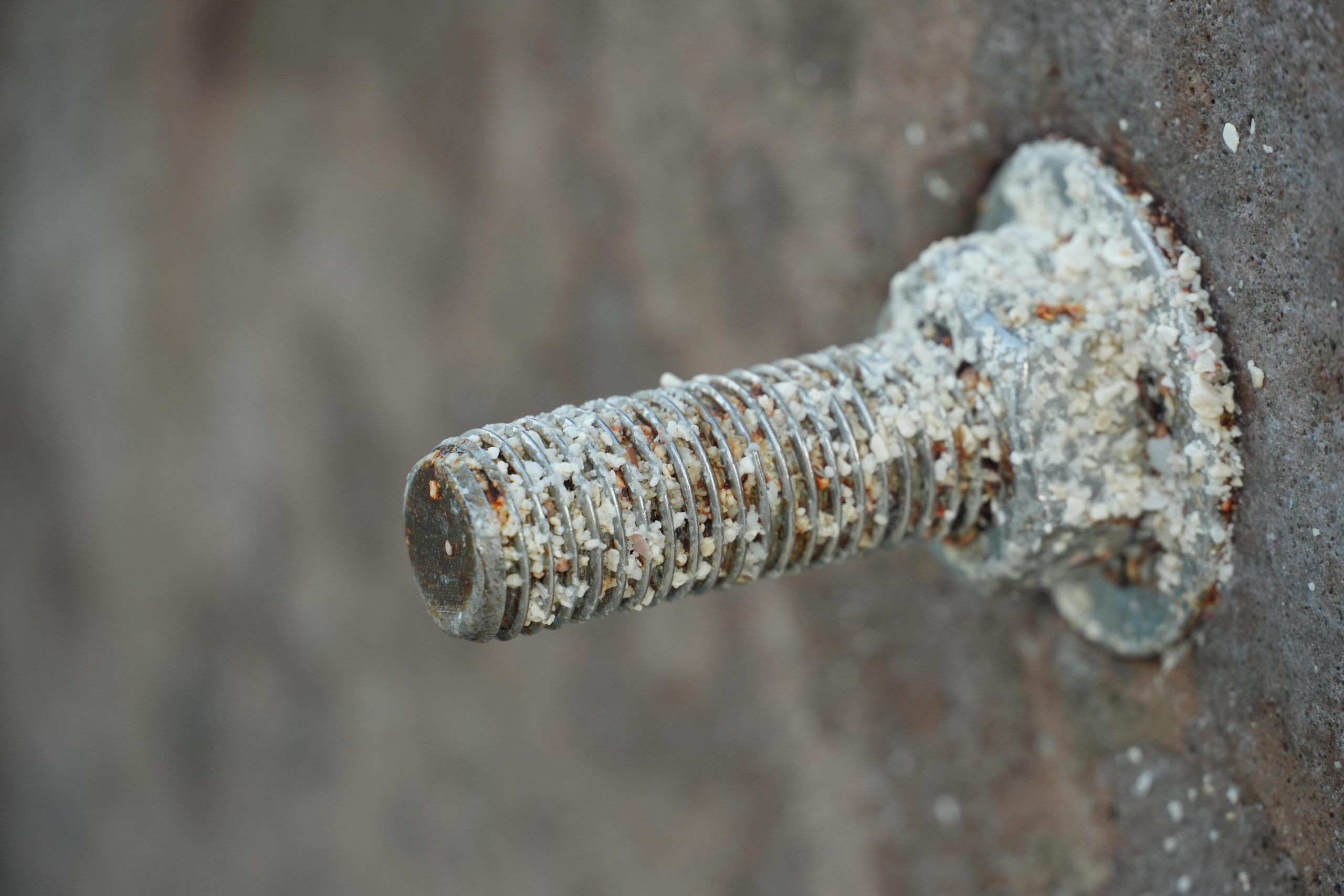
Corrosion around aluminium base plates is a frequent issue, particularly where stainless steel bolts and galvanised components are involved.
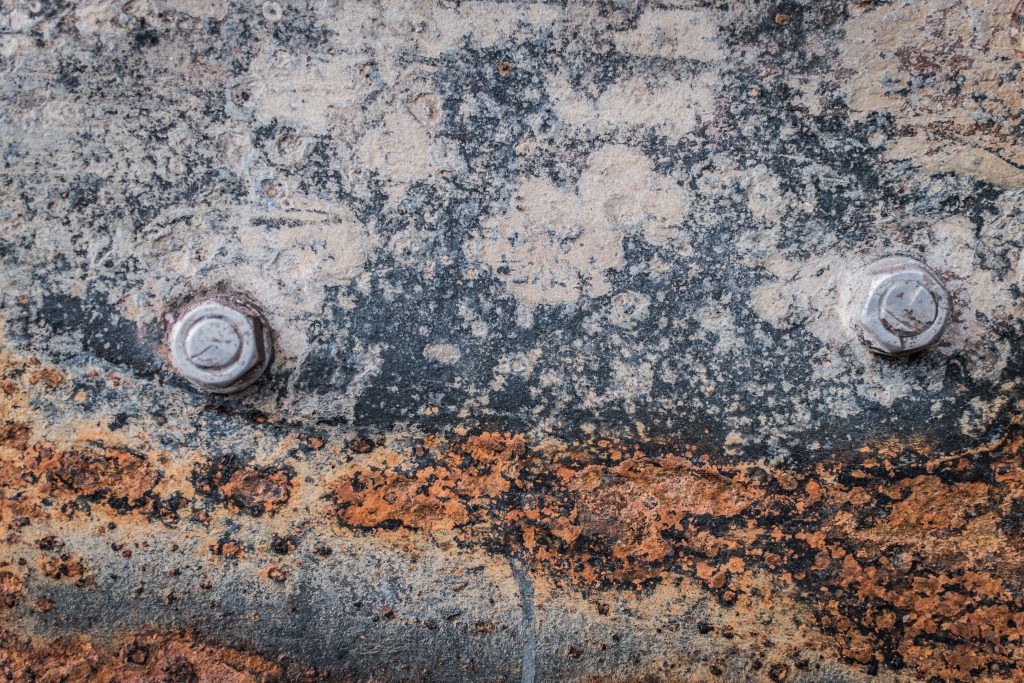
Even when coated with epoxy and polyurethane systems, these areas are vulnerable. The result is often:
- White, powdery corrosion
- Paint lifting
- Localised damage at critical connection points
These failures tend to occur exactly where protection is needed most—around joints, edges, and fasteners.
What’s Causing It? (The Science Made Simple)
This type of corrosion is typically driven by a combination of galvanic corrosion and crevice corrosion.
When dissimilar metals—such as aluminium, stainless steel, and galvanised steel—are in contact and exposed to moisture, a galvanic reaction occurs. Aluminium, being less noble, corrodes first.
At the same time, tight gaps around bolts and joints trap moisture and salts. These areas restrict oxygen flow, accelerating corrosion in what’s known as crevice corrosion.
Even the best coating systems can struggle if:
- Edges aren’t sealed
- Bolt holes are exposed
- Moisture finds its way under the coating
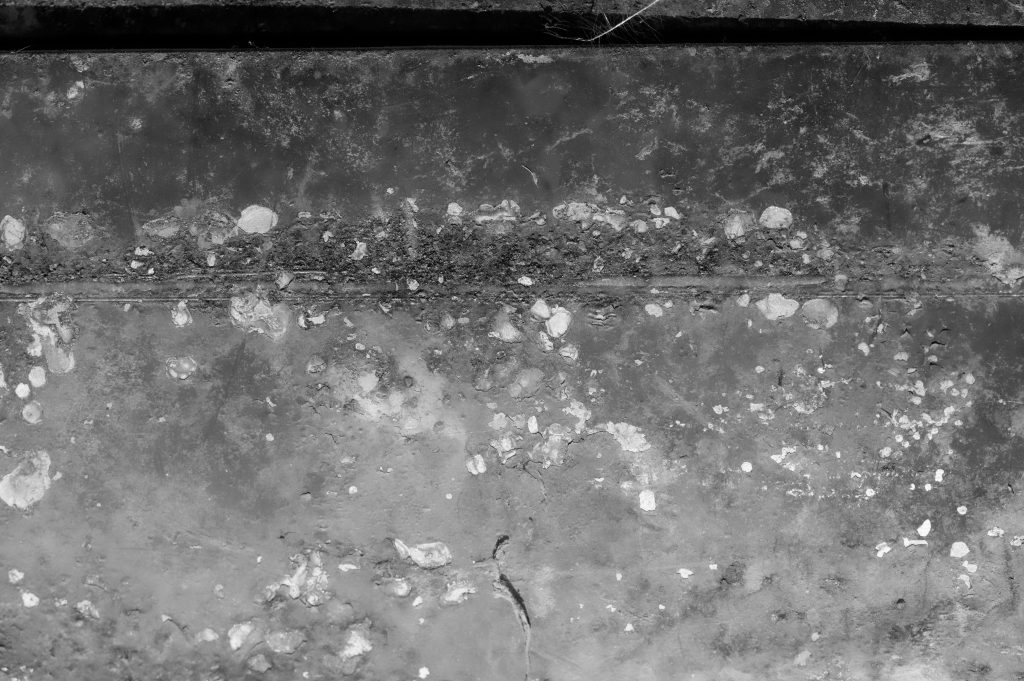
Once corrosion starts, it can spread beneath the coating film.
Why Coatings Sometimes Fail in These Areas
Epoxy and polyurethane systems offer excellent protection—but only when applied and sealed correctly.
Weak points include:
- Insufficient film thickness
- Sharp edges
- Bolt penetrations
- Poorly sealed joints
These areas allow moisture ingress, leading to coating breakdown from underneath.
How to Fix Corrosion Properly
If corrosion is already present, simply painting over it won’t solve the problem. A proper repair process is essential.
Start by removing all visible corrosion using appropriate tools. Follow this with a thorough clean to remove salts and contaminants.
Once clean, the surface should be treated with an appropriate primer system designed for aluminium, followed by a high-build protective coating system to restore long-term performance.
This should be followed by sealing the joints with a flexible sealant to exclude moisture.
Preventing It from Coming Back
Long-term protection comes down to design, sealing, and system selection.
Isolating dissimilar metals helps prevent galvanic reactions. Sealing joints and fasteners reduces the risk of moisture ingress. Upgrading coating systems can also provide an additional layer of protection in harsh environments.
Regular inspection and maintenance play a key role in catching issues early—before they develop into larger failures.
Real-World Insight
This type of corrosion is especially common in:
- Coastal environments
- Industrial zones
- High-exposure outdoor assets
Understanding the root cause allows for smarter specification and longer-lasting results.
Key Takeaway
White corrosion around aluminium base plates isn’t just a surface issue—it’s a combination of material interaction, moisture ingress, and system design.
The good news?
With the right preparation, coating system, and preventive measures, it can be effectively controlled—and avoided altogether.
At A&I Coatings, we specialise in protective coating systems for challenging environments where corrosion is a constant concern.
Get in touch with our team to find the right solution for your project – 1800 819 585 or email helpdesk@aicoatings.com.