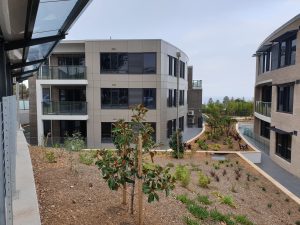
Façade panelling is one of the most popular cladding solutions for architectural and commercial buildings, offering architects and designers extensive freedom to create unique and visually striking building exteriors. Available in a wide range of colours, textures, finishes, and profiles, façade systems can be tailored to achieve almost any design vision.
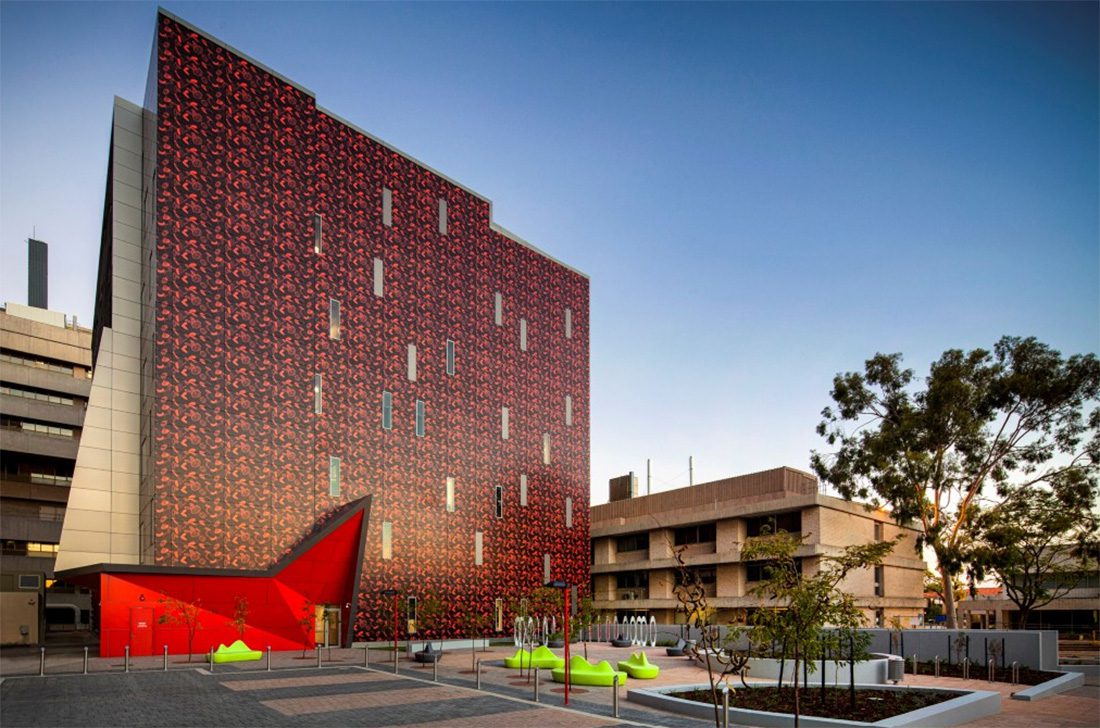
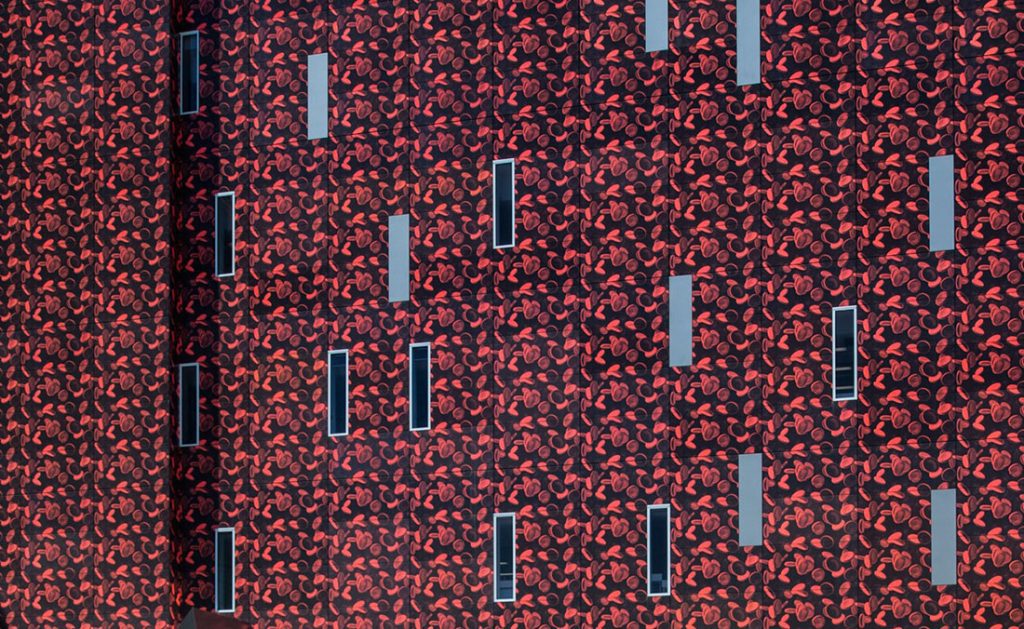
A growing trend in modern architecture is the use of graphic-printed façades, where custom artwork, images, or patterns are digitally printed onto façade panels using advanced manufacturing technology. This allows buildings to become distinctive architectural features while maintaining the performance benefits of traditional cladding systems. The PathWest Laboratory building is an excellent example of how printed façades can combine creativity, functionality, and design innovation.
Façade panels can be manufactured from a variety of materials, including:
- Compressed Fibre Cement (CFC)
- Aluminium Composite Panels (ACP)
- Glass Reinforced Concrete (GRC)
- Steel
- Fibreglass
- Other composite building materials
Regardless of the material selected, all façade systems are exposed to environmental conditions that can affect their appearance, durability, and service life. To maximise long-term performance, façades require protection against:
- Moisture penetration – Prevents water ingress that can lead to corrosion, substrate deterioration, mould growth, and internal moisture-related issues.
- UV degradation – Protects surfaces from harmful ultraviolet radiation that can cause fading, chalking, colour loss, and material breakdown over time.
- Graffiti and vandalism – Maintains the aesthetic appearance of the façade and allows for easier cleaning and removal of unwanted markings.
Implementing appropriate protective coating systems is essential to preserving both the appearance and structural integrity of façade panels, helping to extend their service life while reducing maintenance requirements.
Vitreflon
A&I Coatings R&D team have been focusing heavily on the protection of façade substrates and have perfected the fluoropolymer coating “Vitreflon” for use in this field. Vitreflon, the hallmark of colour stable coatings, has been released into the worldwide market and used on millions of square metres of substrate.
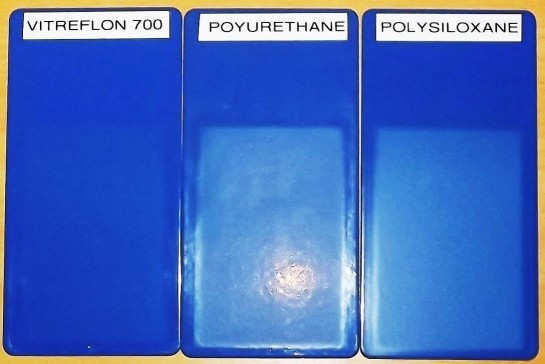
The fluoropolymer coating has brilliant colour retention capacity and far outstrips the performance of market leading alternatives such as Polysiloxane and Polyurethane coatings. Below is a couple of tests completed by A&I Coatings R&D team, showing the performance of Vitreflon against leading Polysiloxane and Polyurethane coatings *. The first test compares gloss and colour change of several different coating systems under the imposed stress of a QUV Weatherometer. As shown in the below image, after 2700 hours (equivalent to 13.5 years) in the QUV Weatherometer, the Vitreflon 700 has minimal colour fading.
The second test compares the corrosion resistance of different coating systems (same products mentioned in the first test) performance that have had an “X” scored right through to the substrate, and endured 917 hours in a “salt spray cabinet”.
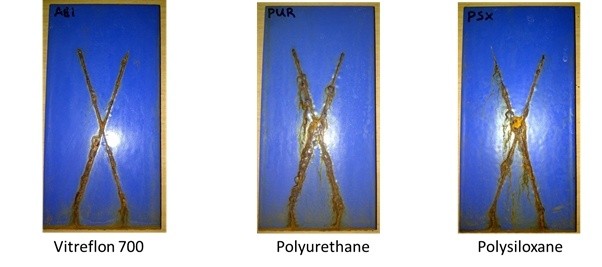
Note that there is minimal “rust creep” in the Vitreflon scored sample. *A&I Coatings cannot specify which Polysiloxane and Polyurethane coatings were used in these tests for legal reasons. Vitreflons superior durability enables the maximum protection of colour and design, keeping the façade looking great for many years. A&I Coatings warranties are issued to specific projects for periods up to 25 years, which cover colour retention, gloss retention, adhesion, and corrosion.
Façade Manufacturers
A&I Coatings supply many façade companies Australia-wide, including Vitragroup . Vitragroup, manufactures of the Vitrapanel, supply facades and panelling for projects including tunnels, bridges, multi-storey buildings, service station refits and airports. Vitragroup have large manufacturing plants situated in Sydney.